The Ideology-Policy Gap

Why Voters Choose Candidates Who Don’t Share Their Beliefs

Sebastián Freille
Instituto de Economía y Finanzas

The Puzzle

A Simple Question

Why do voters choose candidates whose policies they oppose?

  • 90% of Argentines reject cuts to public health and education (Pulsar UBA, 2023-24)
  • Yet Milei won promising exactly that
  • 4 in 10 US Republicans support universal healthcare (Pew Research, 2023)
  • Yet they vote for candidates who oppose it

The Standard Answer: Ideology

Conventional wisdom: people vote their identity

But This Raises a Deeper Question

What IS ideology?

  • Is it symbolic (how you identify)?
  • Or operational (what policies you support)?

Ellis & Stimson (2012): 25-32% of Americans are “conflicted conservatives”

  • Self-identify as conservative
  • But support liberal policies

Our Approach: Separate Ideology from Policy

Ideology Policy
Nature Abstract, identitarian Concrete, operational
Example “Smaller government is better” “Privatize Aerolíneas Argentinas”
Measurement Vague, philosophical questions Specific, real-world questions

Key insight: The gap between ideology and policy positions may predict voting better than either alone.

Research Design

Two Linked Questionnaires

Ideology Questionnaire

  • 28 items (8 economic, 9 social, 11 varias)
  • Vague, identitarian language
  • “Countries with smaller governments are more successful”
  • “Climate change is a serious global concern”

Policy Questionnaire

  • 17 parallel items
  • Concrete, operational language
  • “Privatize Aerolíneas, BNA, ARSAT”
  • “Argentina should withdraw from Paris Agreement”

Each ideology question has a corresponding policy question.

The Political Compass

Two dimensions following standard spatial models (Poole & Rosenthal 1997):

  • X-axis: Economic (Left ↔︎ Right)
  • Y-axis: Social (Liberal ↔︎ Conservative)

Each respondent gets two positions:

  1. Where they stand ideologically
  2. Where they stand on policy

The arrow between them = the ideology-policy gap

Sample

  • N = 25 university students (FCE-UNC)
  • Surveyed around 2023 presidential election
  • Tracked votes: PASO → General → Ballotage

Limitation: Small, homogeneous sample (similar to Alesina & Fuchs-Schündeln 2007 classroom designs)

Advantage: Individual-level tracking; proof of concept for methodology

Finding Candidate Positions

The Problem

We know where voters stand. But where do candidates stand?

Traditional approaches:

  • Expert surveys: Chapel Hill Expert Survey (Bakker et al. 2020)
  • Manifesto coding: CMP/MARPOR (Volkens et al. 2023)
  • Roll-call scaling: NOMINATE (Poole & Rosenthal 1997)

All are resource-intensive or unavailable for new democracies/candidates.

Our Innovation: LLM-Based Inference

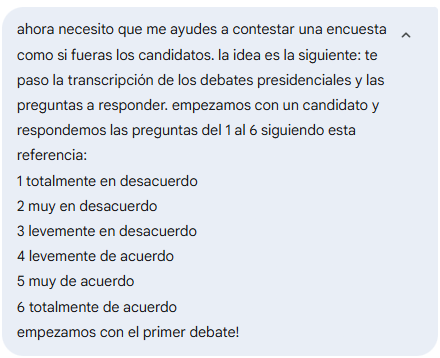
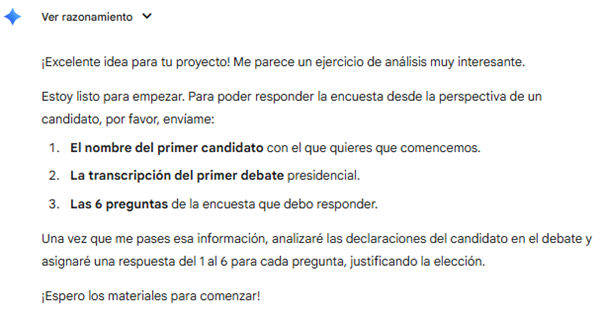
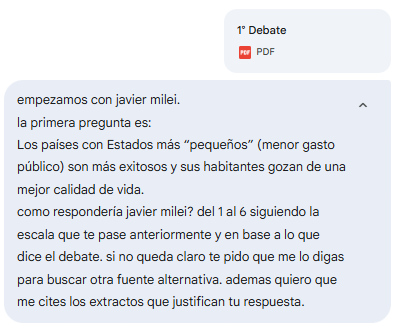
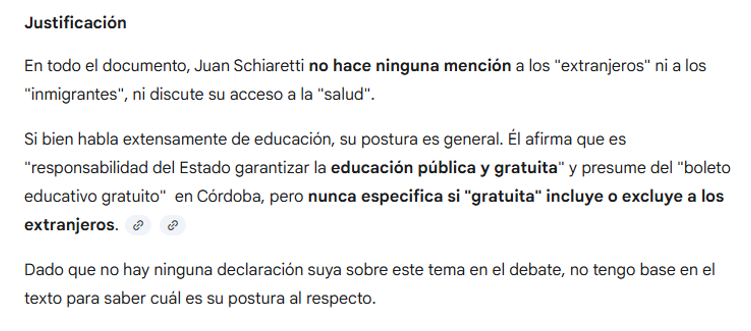
We used Google Gemini 2.5 Pro to:

  1. Analyze presidential debate transcript (Oct 1, 2023)
  2. Answer our survey questions as each candidate
  3. Provide verbatim quotes as justification

Related work: Argyle et al. (2023) on LLMs simulating survey responses; Wu et al. (2023) on scaling political texts with LLMs
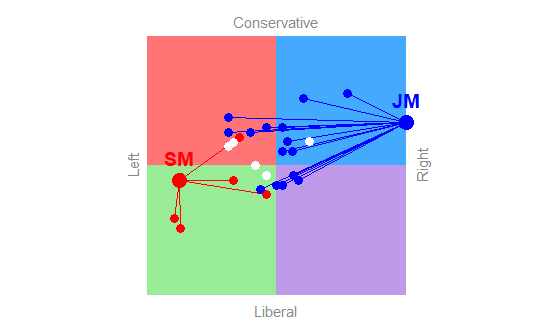
Candidate Positions

Policy space

Ideology space

Results

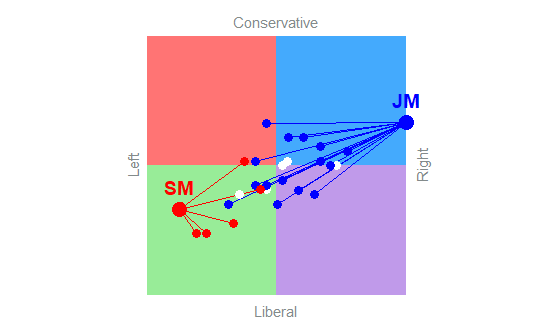
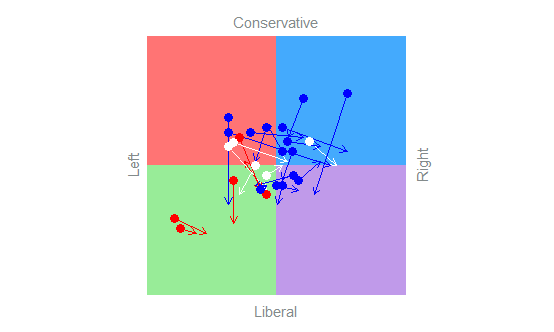
The Ideology-Policy Map

Arrows show the gap between ideology and policy positions. Colors: blue (Milei), red (Massa), white (blank vote)

Key Observations

1. Voters are more centrist than their candidates

  • Both Milei and Massa voters cluster near the center
  • Candidates occupy more extreme positions
  • Cf. Fiorina (2017) on elite polarization vs. mass moderation

2. The ideology-policy gap varies systematically

  • Some voters: ideology ≈ policy (consistent)
  • Other voters: large gap (conflicted)

The Probabilistic Voting Model

Following Lindbeck & Weibull (1987) and Persson & Tabellini (2000):

\[V^{ij} = V^{j}(\mathbf{q}) + \sigma^{ij}(P)\]

We adapt to multidimensional space:

\[P(\text{Vote}_A) = f(\alpha \cdot d_{\text{ideo}} + \beta \cdot d_{\text{pol}})\]

Where \(d\) = Euclidean distance to candidate in respective space

Main Result

Variable Coefficient p-value
Intercept 1.93 0.03**
Ideology distance -0.07 0.56
Policy distance -0.30 0.09*

Policy proximity matters more than ideological proximity (\(\beta > \alpha\))

Accuracy: 76% (19/25 correctly predicted)

Interpretation

What Does This Mean?

  1. Voting is more “pocketbook” than “heart”
    • Consistent with economic voting literature (Lewis-Beck & Stegmaier 2000)
  1. The ideology puzzle has a spatial dimension
    • Extends Ellis & Stimson (2012) from unidimensional to two-dimensional space
  1. Candidate positioning matters
    • Voters are centrist; candidates are extreme
    • Challenges MVT convergence prediction (Downs 1957)

Alternative Interpretations

Why might ideology matter less in this sample?

  • Politically sophisticated respondents (economics students)
  • High-information environment (3 electoral rounds)
  • Economic crisis made policy unusually salient (cf. Singer 2011 on issue salience)

Caution: Small sample, single election—replication needed

Implications & Next Steps

Broader Implications

For understanding populism (Mudde & Rovira Kaltwasser 2017):

  • If voters vote policy but identify ideologically
  • Politicians may rationally pursue “bait and switch” strategies
  • Speaks to literature on populist rhetoric vs. policy (Roberts 2022)

For democratic theory:

  • Representation gap may emerge even with informed voters
  • Multidimensional competition complicates accountability

Next Steps

  1. Scale up: Larger, representative sample (online panels, cross-university)
  2. Add social identity: In-group/out-group measures (following Huddy 2001)
  3. Validate LLM method: Compare to expert surveys; test inter-model reliability
  4. Comparative extension: Brazil 2022, US 2024

The payoff: Better understanding of why democracies produce policies voters don’t want.

Thank You

Questions?

Contact: sfreille@unc.edu.ar

Collaborators: Rubio, M; Jaroszewski, V.; Hofmann, R.; Albarracin, C.; Prazoni, G.; Larovere, S.; Seia, L; Bachiglione, C.; Balbo, S.

Appendix

Appendix: Survey Instruments

Ideology questions

Appendix: Policy Questions

Policy questions

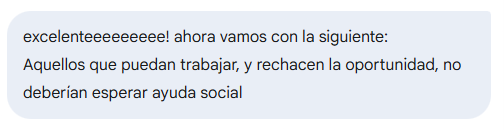
Appendix: AI Interaction Example

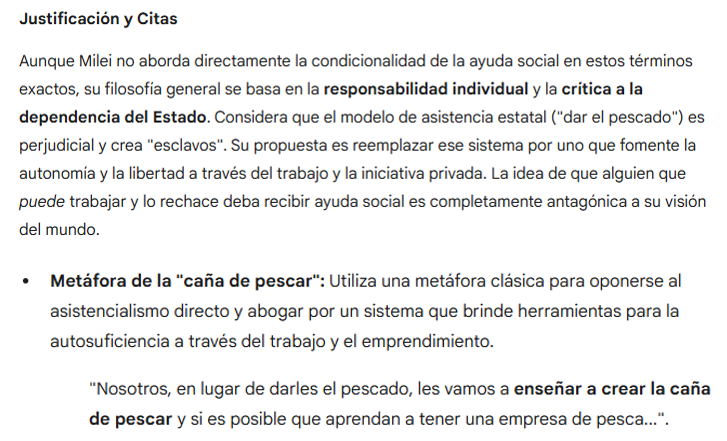
Appendix: AI Interaction Example (cont.)

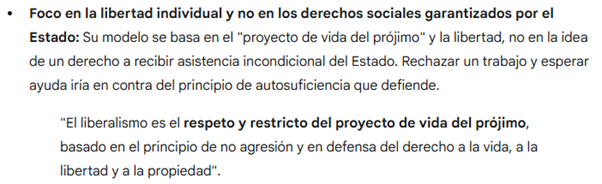
Appendix: AI Interaction Example (cont.)

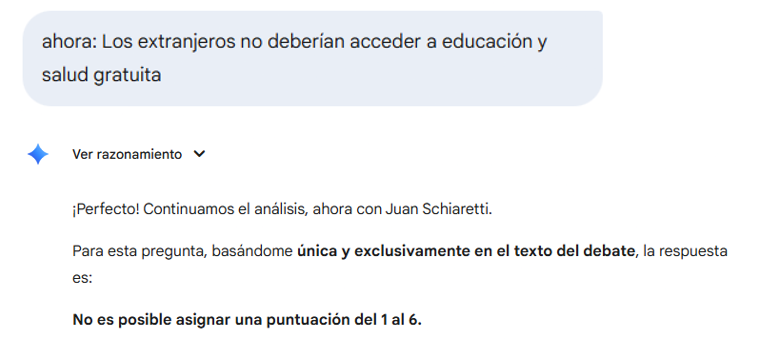
Appendix: AI Interaction Example (cont.)

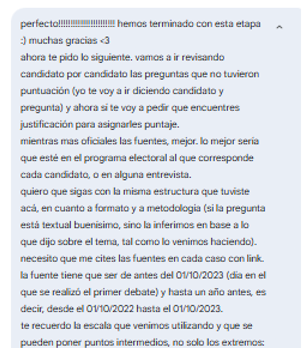
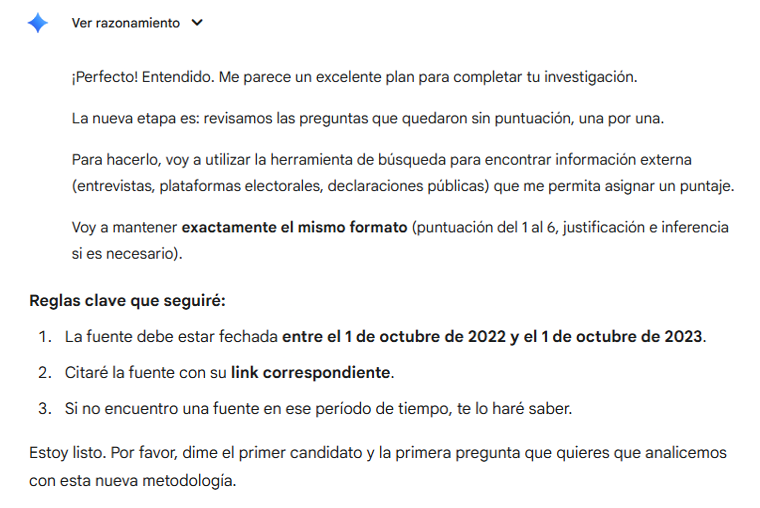
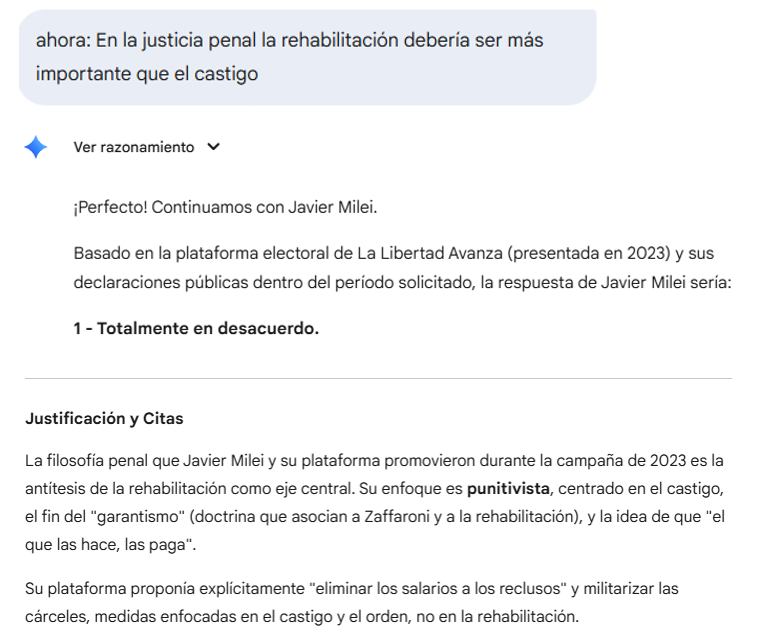
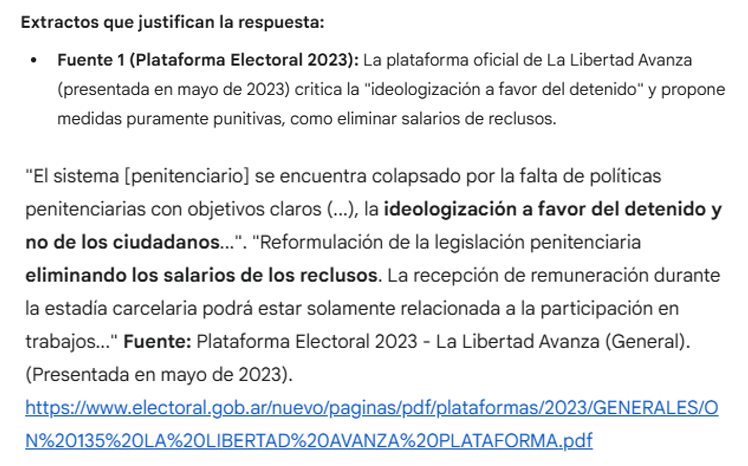
  • We then asked the AI model to use external sources to try to score questions which went unanswered on the basis of the transcripts. These sources could be personal interviews, political platforms in the CNE and additional indirect sources.
    • we limited the search to information within one year prior to the Presidential debate
  • As in the first stage, we asked the AI model to provide quotes and excerpts used in its scoring.
  • All the questions were thus answered using this procedure.

Appendix: AI Interaction Example (cont.)